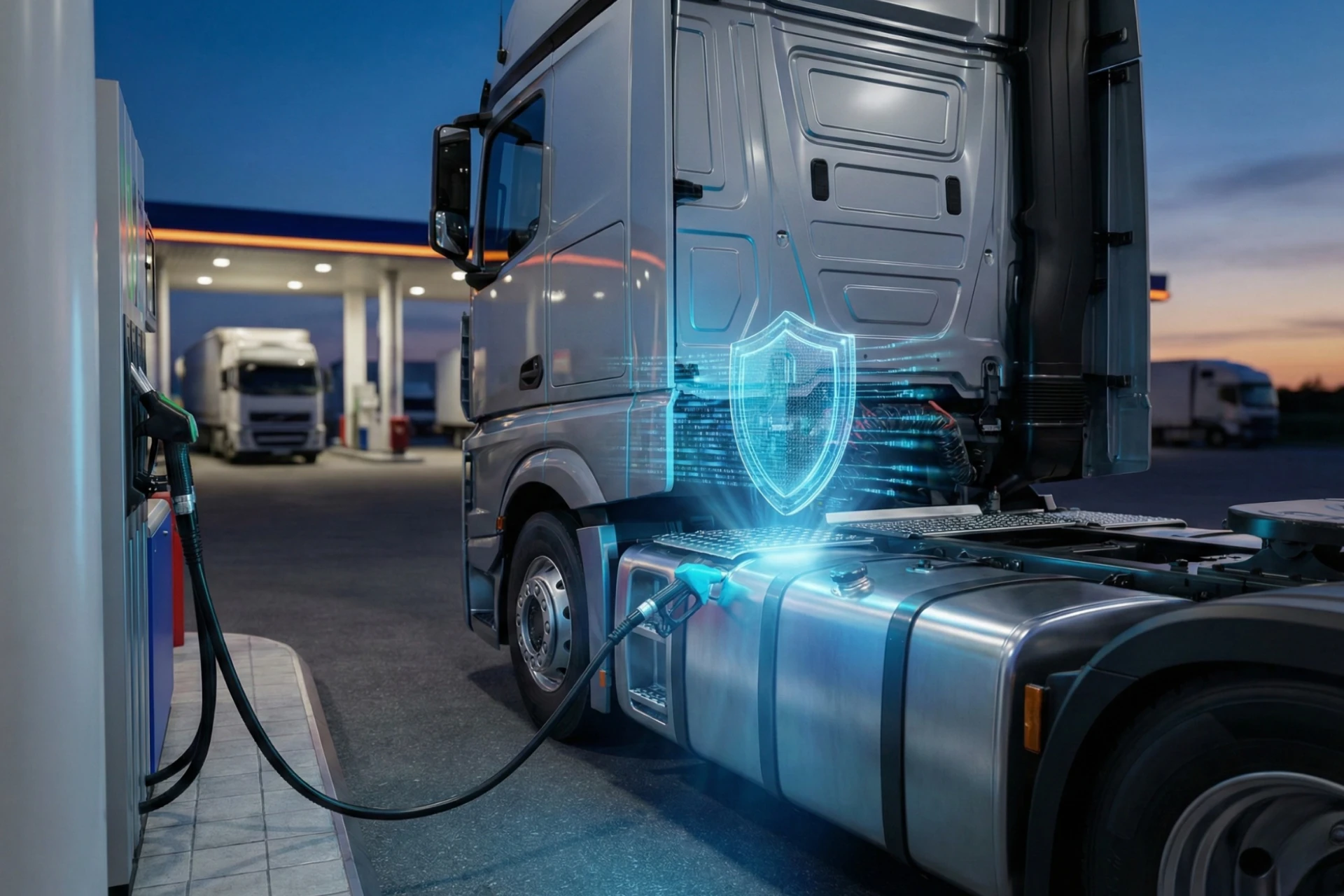
Protect your fleet from rising fuel fraud in 2026. As North America’s leading fuel discount network, Nomad helps fleet managers stop fuel card fraud and fuel theft with real-time tracking and zero monthly fees. Secure your fleet budget starting today.
The transportation industry has always been a target for bad actors, but as we navigate through 2026, the tactics used to siphon profits from hardworking fleets have become increasingly sophisticated.
For fleet managers and owner-operators, staying ahead of fuel fraud is a financial necessity, not just a security measure. At Nomad, our mission is to level the playing field for transporters. That starts with being honest about the risks and providing the tools to stop fraud before it can significantly impact your fleet operations.
Understanding these evolving patterns is the first step toward securing your company's resources and ensuring you actually see the savings you've worked for.
In 2026, fuel fraud has moved far beyond simple stolen receipts. It now encompasses a complex range of fraudulent activities, categorized as external and internal. Both forms of misuse can lead to a massive drain on your fleet budget.
According to industry reports, fleets can lose up to 5% of their total fuel spend to various forms of fraud each year. For a large company, that represents thousands of dollars in lost money that should have gone toward growth and driver retention.
External fraud often involves sophisticated technology designed to bypass traditional security. In 2026, we’re seeing a rise in data breaches targeting the fuel data of large carriers.
Modern skimmers are hidden entirely within the pump's card reader, making them nearly impossible for drivers to identify during a standard fleet vehicle fill-up.
Hackers may use text message or mobile signal interception to "man-in-the-middle" fuel transactions, authorizing fuel purchases for themselves while the bill is sent to your fleet fuel cards.
A common fuel scam involves social engineering, where a caller pretends to be from a fuel program to steal fuel card PINs or account details.
Not every instance of fuel theft involves a masked hacker. Often, it’s a matter of fuel misuse or fuel card misuse within the company. This type of internal fraud is often harder to detect because it involves small amounts over a long period.
This occurs when an employee uses fleet fuel cards to fill up personal vehicles or a non-fleet vehicle while their company vehicle is at the station.
Some drivers might attempt to purchase more fuel than their fleet vehicle's tank capacity, pocketing the difference or filling external containers.
Using fleet fuel for personal use on unapproved or non-approved routes is a frequent form of misuse that adds up quickly.
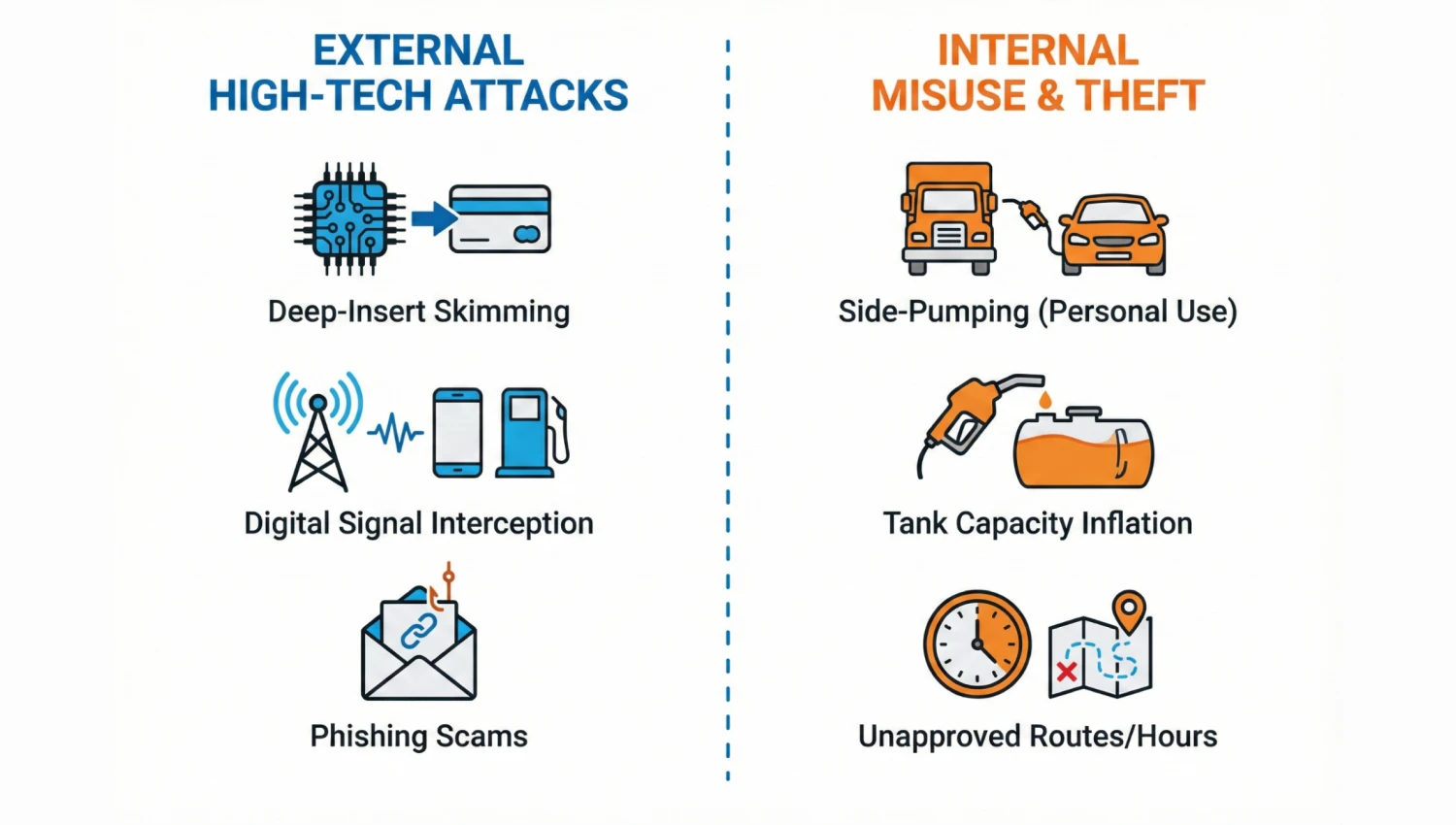
Image Source: AI-Generated
To protect your business, you must know how to identify the warning signs of fuel fraud. By analyzing your fuel data and fuel card transactions, you can spot misuse patterns before they become a crisis.
Beyond the immediate financial loss, fraudulent activity creates a lack of accountability within your team. When fleet managers don't have control over fuel expenses, the entire fleet management strategy suffers.
Nomad provides fleet fuel solutions that prioritize transparency. We believe in using real, specific numbers to build credibility. For example, with Nomad, you could save $650 per truck in a single month with our network discounts, fleet management, and fraud prevention tools.
We aren't just a fuel discount network; we’re your partner in fleet operations.
Our system is designed to prevent fuel fraud through robust controls and integration with fleet management software.
At the end of the day, fuel fraudsters are basically motivated freeloaders, and nobody likes a freeloader.
Whether they're hiding skimmers in pumps, sweet-talking PINs out of unsuspecting drivers, or quietly topping off their personal pickup on company time, the game is the same: take what isn't theirs. But with the right tools in your corner, you're not just playing defense; you're making their job nearly impossible.
So let the bad actors sweat. Your fleet is locked down, your savings are stacked up, and the only thing getting siphoned from here on out is their motivation to try again.
Join North America's leading fuel discount network to gain total control over your fleet with real-time tracking, no deposits, and zero monthly fees. Ready to secure your fleet? Contact us and get started with Nomad today.