Fuel Cards for Truck Drivers: Why Fleet Discounts Are Needed

December 15, 2025
4 mins
Jeremy Kelly
Chief Growth Officer
A large fleet of trucks parked outside

Gain Exclusive Fuel Discounts with Nomad

Stop letting high fuel prices and complicated accounting hold your business back—clear the road to financial freedom with Nomad.

Without fleet discounts, truckers end up overpaying for fuel every single day. Unlike large fleets that get bulk pricing, most smaller operations pay full retail at the pump. That difference could add up to thousands of dollars per year.

Fuel prices keep climbing. As a business owner relying on fuel daily, even a few cents per gallon can add up to thousands a year. It’s easy to feel cornered. You might think there’s no way to control costs unless you’re a massive trucking company with bulk fuel contracts.

But that isn’t the case. Fuel cards for truck drivers level the playing field by providing access to fleet discounts typically reserved for large carriers. Here’s why traditional fuel pricing systems put you at a disadvantage, and how your business can close the gap.
Are You Paying More Per Mile Than You Should?

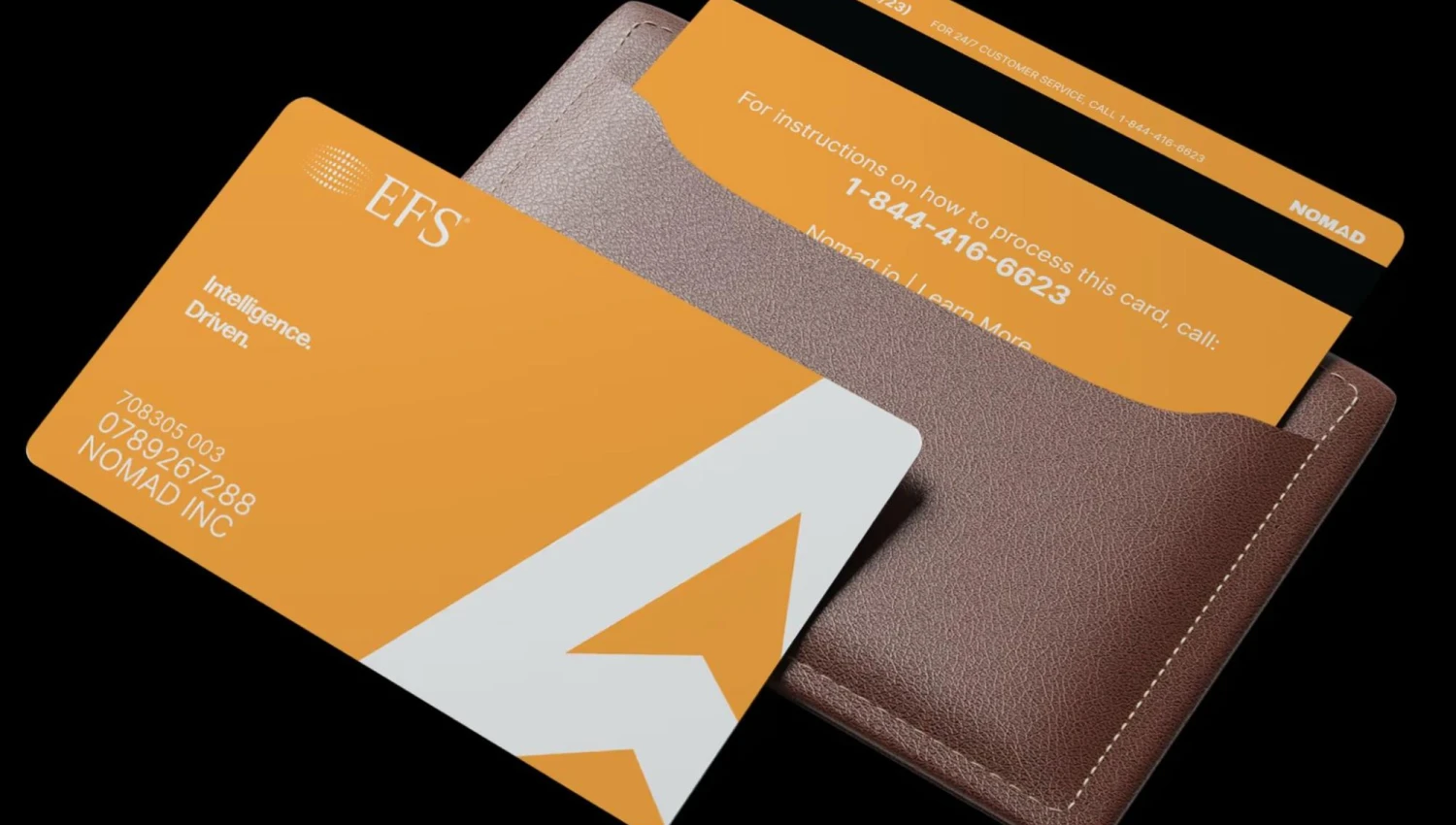
A fleet card in a brown wallet.

In the trucking industry, bigger companies have the upper hand. They get access to wholesale fuel rates since they purchase fuel in bulk. Meanwhile, single-owner operators often pay full retail at the pump. Those extra cents per gallon, without fleet discounts, stack up quickly and chip away at your operating margins.

To help you better understand the gap, here’s how much trucking companies pay based on fleet size, according to the American Trucking Research Institute.

Fleet Size Cost per Mile (Specialized) Cost per Mile (Truckload)
<5 Trucks $0.536 $0.447
5 to 25 Trucks $0.553 $0.565
26 to 100 Trucks $0.572 $0.510
101 to 250 Trucks $0.551 $0.462
251 to 1,000 Trucks $0.514 $0.445
>1,000 Trucks $0.391 $0.436

Small fleets pay significantly more for fuel per mile than larger carriers without realizing it. For example, truckload fleets with fewer than five trucks spend about $0.565 per mile, while fleets with over 1,000 trucks spend only $0.436. That’s $0.129 in missed fuel savings.

For a distance of over 300 miles, each truck incurs an additional fuel expense of $38.70. Multiply that by 240 driving days a year, and the gap grows to $9,288 just from paying more per gallon.
A truck driving on a highway near the mountains

Source: Pexels

How Fuel Cards Help Level the Playing Field for Truckers

Does that mean you need 1,000 trucks to get the lowest rates on fuel, repairs, and maintenance services? There’s a better solution. You can enjoy the same benefits that larger companies get by applying for a fuel card

Fuel discount providers offer small- to mid-sized carriers substantial discounts on their fuel purchases, eliminating the complexity of volume commitments. They negotiate discounted rates directly with a nationwide network of truck stops and fuel stations. These rates are often based on wholesale or network-preferred pricing rather than the retail pump price.

Here’s how to use your fuel card strategically and further maximize your savings:

  • Use real-time price tools. Some cards help drivers find the cheapest fuel on their route before filling up, e.g., fuel finder.
  • Assign cards to individual drivers. Monitor individual accounts to control spending and prevent unauthorized transactions. 
  • Set limits on daily spending. Keep your costs predictable and cut down on unnecessary top-ups.
  • Review monthly reports. Analyze spend patterns to adjust routes or refueling behavior over time.

The discounts vary per provider, but with Nomad, you can save about $600 monthly on about $4,000 worth of fleet fuel.
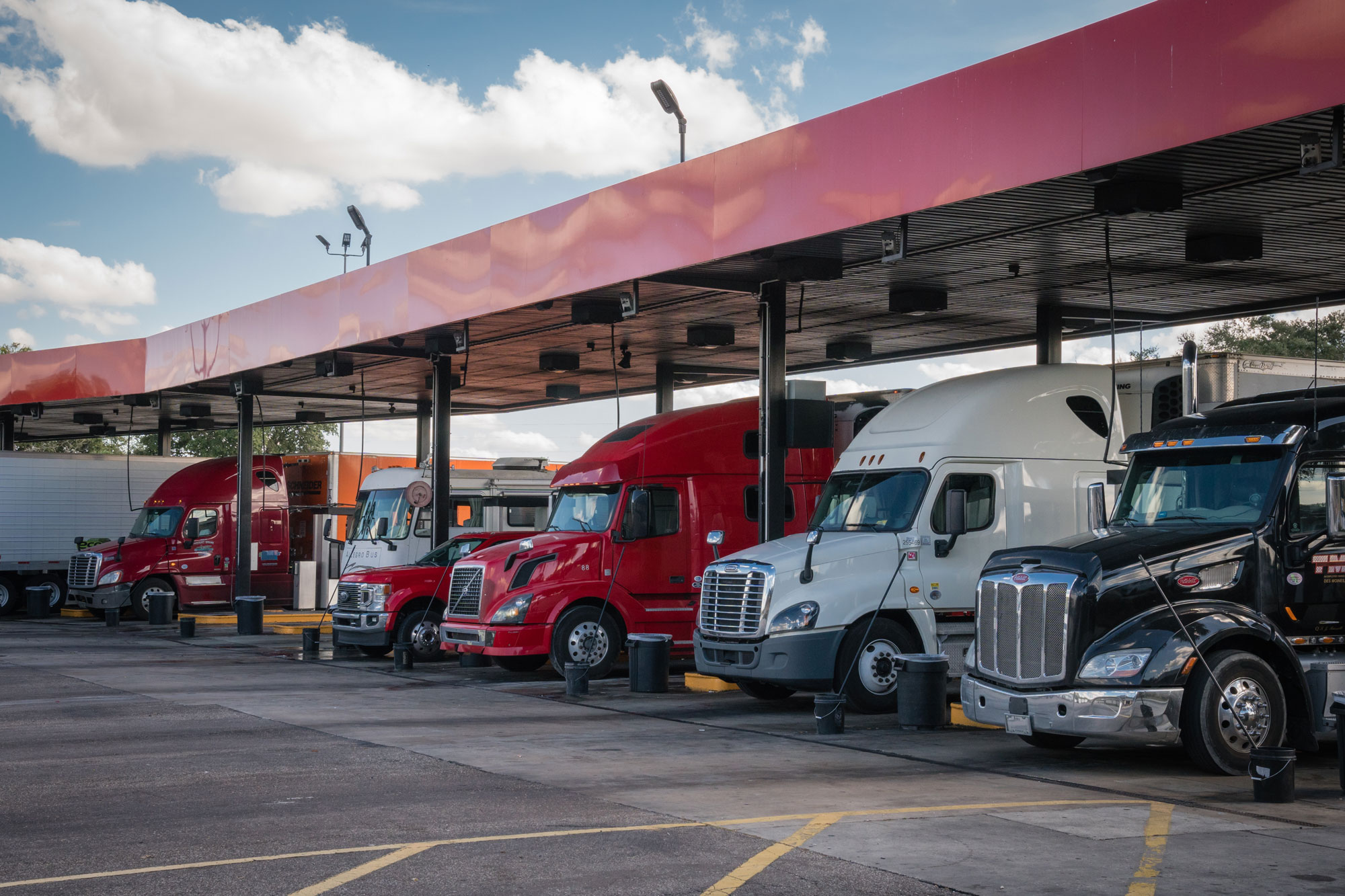
Trucks filling up on fuel at night

Source: Pexels

FAQs About Fuel Cards and Fleet Discounts

What’s the right fuel card for truck drivers?

There’s no single best fuel card for every fleet. Look for cards that offer discounted rates at thousands of locations, provide multiple rebate options, and include add-on features for added convenience. You’d want to maximize savings without sacrificing route flexibility.

How do you use a fuel card?

+

Drivers can swipe or insert the fuel card at participating stations. They might have to enter a driver ID or PIN before pumping for verification. Charges are billed to the company account and logged automatically (no hidden fees).

How do company fuel cards work?

+

Businesses apply for a fuel card program and assign individual driver or vehicle cards. Each card is tied to a provider that negotiates wholesale fuel rates with an extensive network of stations. Every transaction is logged with itemized receipts, fuel volume, and driver information, making it easier to control expenses. Payments are typically settled on a weekly or monthly basis through company invoices.

In Summary

  • Trucking businesses with fewer than five trucks pay up to $0.129 more per mile in fuel costs than the largest carriers.
  • That fuel gap adds up to roughly $9,288 more per truck annually if you drive 300 miles daily.
  • Fuel cards enable small fleets to access wholesale or network-based discounts without requiring bulk volume commitments.
  • Using fuel cards, like refueling in-network and setting spending limits, further increases savings.
  • With fuel cards, owner-operators and small carriers can save up to $600 per truck per month.

Get Exclusive Fuel Discounts for Fleets of All Sizes With Nomad

Start saving on fuel expenses today. You’ll access significant discounts at thousands of stations nationwide with Nomad. We aim to democratize fuel pricing and level the playing field for trucking businesses of all sizes, from large trucking companies to owner-operators.

Speak to a representative today. Let’s discuss how you can use our commercial fuel card to reduce fuel costs and maximize profits.

Drive More,
Spend Less.

Sign Up Today!