A fleet fuel management system tracks fuel usage, prevents fuel theft, and cuts fuel costs by combining fuel cards, real-time data, and spending controls. Fleet managers get instant visibility into fuel usage and automated reporting, eliminating the need for manual tracking entirely.
Running a fleet means juggling dozens, sometimes hundreds, of moving parts, and fuel is one of the biggest and most unpredictable. A fuel management system is what brings order to that chaos, giving fleet managers a clear, real-time picture of fuel consumption, fuel costs, and driver behavior across every vehicle on the road.
If you’ve heard the term thrown around but aren’t sure what it actually covers, our guide here at Nomad breaks down what a fuel management system does, how it works, and why so many fleets are moving away from spreadsheets in favor of one.
No jargon included.
A fleet fuel management system is a combination of hardware and software components, typically fuel cards, telematics, and reporting dashboards, that helps businesses track, control, and optimize fuel usage across their vehicles and drivers.
At its core, a fuel management system answers three questions every fleet manager needs answered daily:
Instead of manually collecting receipts or reconciling fuel costs after the fact, a fuel management system captures fuel data automatically at the point of purchase. That means less paperwork, fewer surprises, and a much clearer picture of where your fuel budget is actually going.
For fleets of any size, from a handful of trucks to a national operation, this shifts fuel management from a reactive expense into something you can actively monitor, forecast, and improve.
Fuel management systems work by connecting four pieces:
Instead of relying on cash or personal payment methods, drivers use a specialized fuel card at participating stations. Today, many electronic pumps link directly with these cards right at the fuel island, instantly connecting each purchase to a specific vehicle and driver the moment fuel starts pumping.
The moment a card is used, the system instantly records key transaction details, including the location, gallons purchased, price per gallon, time, and vehicle ID. This live fuel consumption data acts as the foundation for the entire system, streaming directly into your dashboard in real time rather than days later.
Control and transparency truly matter here. By building guardrails directly into the system, you aren't just hoping drivers stay within budget. Instead, fleet managers can actively set limits on transaction amounts, approved fuel stops, and exactly what each card can be used for.
All of that data rolls up into reports that fleet managers can actually use: fuel usage by driver, vehicle, and route, as well as trends over time. Many fuel management systems also integrate with telematics for a more complete view of fleet operations, connecting fuel data with mileage, idling time, and route history through a single web portal.
A complete fuel management system typically includes a mix of hardware and software components working together:
The goal is a single connected fuel management system rather than a patchwork of cards, spreadsheets, and manual checks.
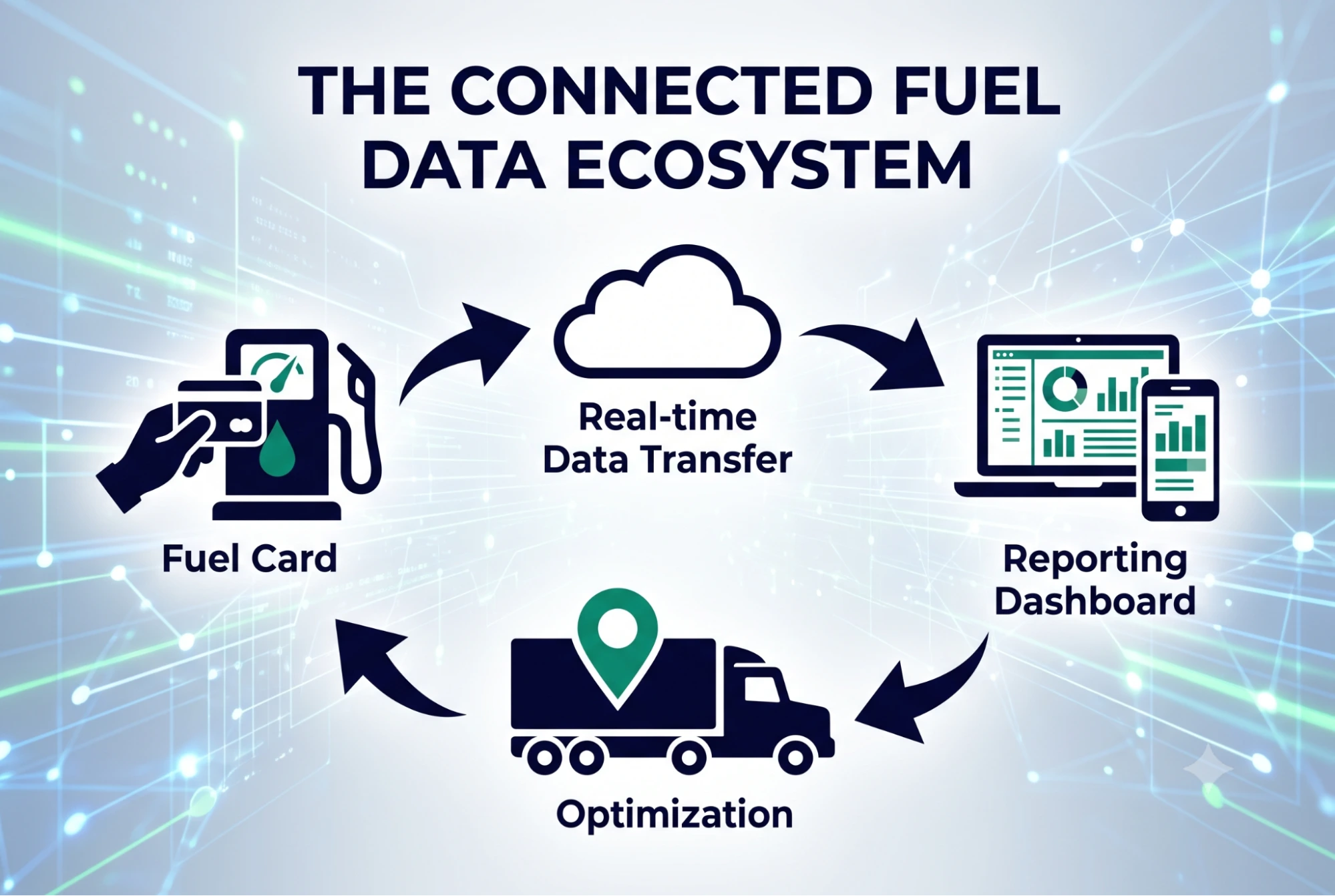
Image Source: Gemini 2026
A fuel management system pays for itself in measurable ways: fuel discounts, fewer wasted gallons, less administrative time, and fewer losses to theft or compliance gaps, each backed by real numbers below.
Good driving habits directly impact fuel economy. Cutting highway speed can improve fuel economy by roughly 7% for every five mph above 50 mph, which is equivalent to about $0.20 to $0.30 per gallon at typical fuel prices, and those savings add up quickly across a fleet.
Route optimization cuts fuel waste by catching what's easy to miss: excessive idling, inefficient stops, and unnecessary detours before they add up. The stakes are real: fuel runs close to $0.48 per mile, roughly a fifth of the average cost to operate a truck.
Basing routes on real usage patterns, not guesswork, is one of the fastest ways fleets cut costs.
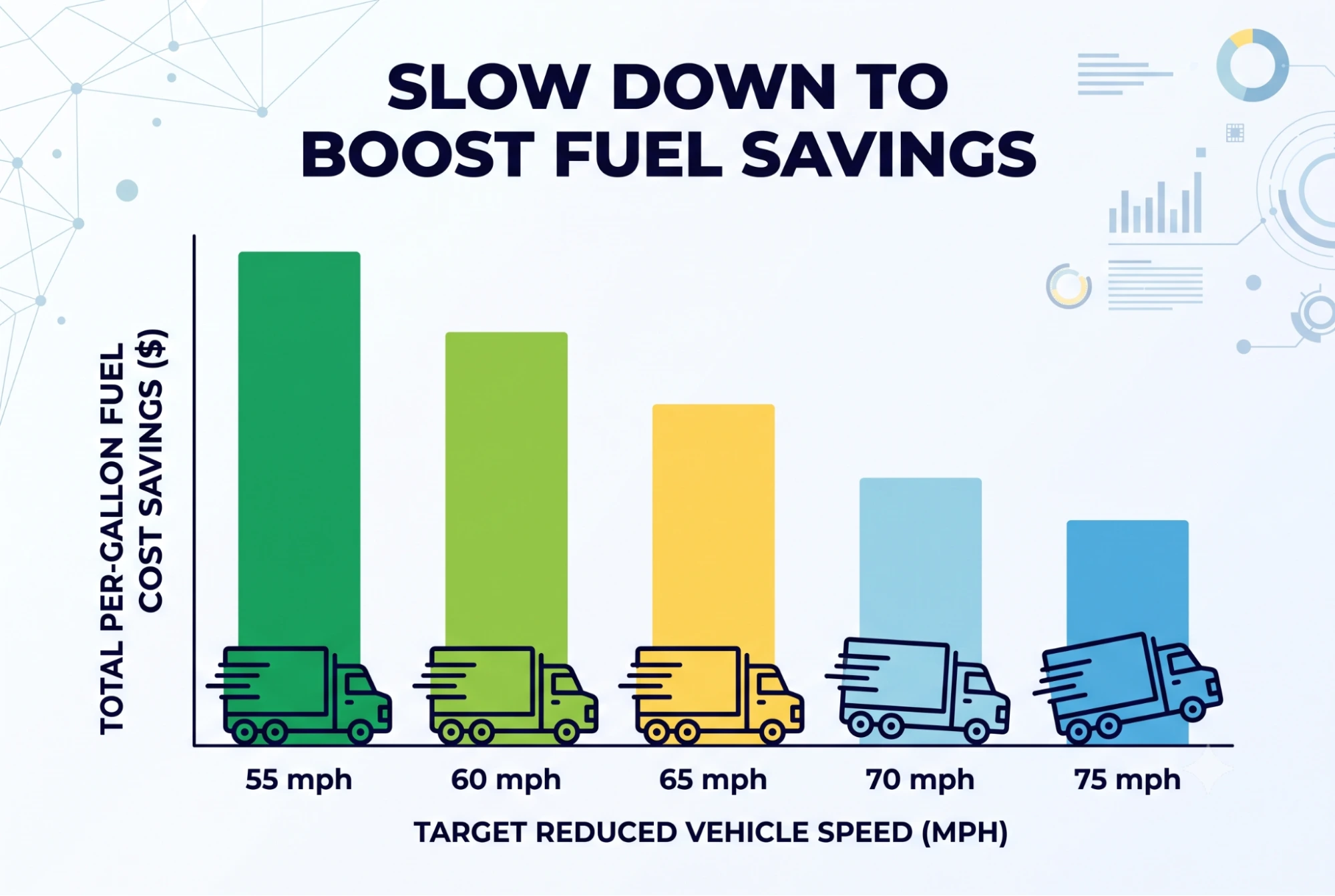
Image Source: Gemini 2026
Real-time fuel monitoring flags inefficiencies the moment they happen, not weeks later when the bill arrives. A sudden spike in fuel use, an unusual stop, a tank that's draining faster than the route explains: all of it surfaces immediately instead of getting buried in a monthly statement. That's the difference between reacting to fuel waste and preventing it.
With Nomad, fleets could save $600 per truck in a single month by tapping into fuel discounts across thousands of fuel stops, a meaningful figure for any fleet running more than a few trucks.
Manually reconciling fuel receipts for a fleet of even 20 trucks can consume several hours every week. Automated reporting reduces that to a few minutes, since fuel data is already organized and ready for review.
A fuel management system turns fuel theft from an invisible cost into something fleet managers can catch and stop in real time, using three layers of automated defense:
The Bottom Line: Implementing these automated controls shifts fuel management from a passive cost-absorption model to an active defense system, immediately stopping invisible losses.
A fuel management system turns regulatory compliance into part of daily operations rather than a quarterly scramble.
Quarterly IFTA (International Fuel Tax Agreement) returns require detailed fuel usage documentation broken out by jurisdiction, and pulling that together manually from receipts and mileage logs is genuinely time-consuming.
Automated fuel management systems streamline IFTA reporting by automatically linking every fuel transaction to a location, vehicle, and date.
Beyond IFTA, fuel management systems provide accurate records that support broader regulatory compliance and tax documentation, generating reports on demand rather than requiring a scramble every time an audit or filing deadline approaches.
Plenty of smaller fleets start out tracking fuel with a spreadsheet, a stack of receipts, and a lot of patience. That works for a while.
Here’s how to tell when it stops working.
If any of that sounds familiar, your fleet is likely ready for a system built specifically for this job.
The honest answer depends on your fleet's fuel usage and goals, but Nomad's platform was built around the exact problems fleet managers deal with every day: unpredictable costs, scattered data, and a lack of real-time visibility, all with no monthly fees or deposit required to get started.
With Nomad, you get fuel discounts at thousands of fuel stops across North America, spending limits and controls you set yourself, and real-time reporting that shows exactly what’s happening with your fleet's fuel usage in real time, not weeks later. Pricing stays transparent and tied to market trends, so there’s never a guessing game around what you’re paying and why.
It’s built on a simple idea: leveling the playing field for transporters means giving them the same tools and visibility that larger operations have always had. Whether you’re running five trucks or five hundred, Nomad's network, controls, and reporting scale with you.
Curious what a fuel management system could save your fleet? Find out how much you could save per truck each month and see whether Nomad's network and controls are the right fit for where your fleet is headed.

.webp)
